When Will Weed Be Legalised in India?
why weed is illegal?
Narcotic Drugs and Psychotropic Substances Act, 1985. The 1980s ban was imposed under diplomatic pressure from western countries, including the US.
click to see NDPS
In the past decade, there’s been a sea change with
respect to the global attitude to cannabis. Its use has been legalised
in some form or another across most of the US, many EU nations,
Argentina, Mexico, Canada, Brazil, Switzerland, Australia, New Zealand,
Turkey, South Africa, and South Korea.
India,
however, is completely out of step with this global trend, as the use of
cannabis—both medical and recreational—remains illegal in the country.
Globally,
these bans have been rescinded as nations have realised two things:
First, bans didn’t work over a period of many decades. Since cannabis is
easy to grow and process, bans only led to the creation of a large
criminal industry that smuggled and distributed the drug, with police
forces, customs services, etc. being corrupted into the bargain and
large numbers of people being thrown into jail for personal use. Second,
cannabis has enormous medical value. It is used to alleviate nausea and
pain in cancer victims and amputees, for instance. It is also among the
least harmful of recreational drugs.
Cannabis has
become a legal, tax-paying, multi-billion industry with listed companies
traded on the US and Canadian stock exchanges. The global market for
legal cannabis is expected to reach $145 billion by 2025 with
double-digit growth rates projected.
Legalisation
has been a win-win for both industry and governments. As legal access to
cannabis has increased, ancillary crime associated with the trade has
fallen. Growers and distributors have become tax-payers. Medical and
bioscience research into the plant’s potential uses has increased.
Secondary and tertiary employment has been generated by marketing and
branding of both recreational and medical cannabis, complete with the
sale of accessories.
Ganja and bhang have strong global recall and mental association with India’s cultural traditions—that’s why India is a favoured destination on the hippie trail.
India
already has unofficial geographical indicator trademarks for ganja and
charas. Specific districts in states like Kerala, Manipur, Himachal
Pradesh for instance, are famous the world-over for the quality of the
local produce. Much like Darjeeling Tea or champagne, cannabis from
Manali, Malana, Manikaran and Idukki are names to conjure with,
globally. Officially locking in branding with regional indicators could
give India a big edge. The medical and bioscience research expertise
also exists to develop new medical prescription drugs.

Summary
| Description |
English: World laws on possession of cannabis.weed
Legal or essentially legal
Illegal but decriminalized
Illegal but often unenforced
Illegal
No information
| |||||
Legalize Marijuana In IndiaIndians, stand with us !The United States' pressure for 25 years, India finally gave into the demands of its Western counterpart in 1986 by clubbing marijuana with other hard drugs and criminalizing it. |
 |
2. Marijuana addiction is rare
An epidemiological study showed that only 9 percent of those who use marijuana end up being clinically dependent on it. The 'comparable rates' for tobacco, alcohol and cocaine stood at 32 percent, 15 percent and 16 percent respectively.
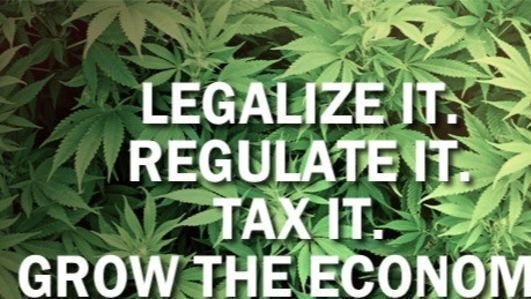
3. Taxing marijuana will increase government's revenue
By legalizing and taxing marijuana, the government will stand to earn huge amounts of revenue that will otherwise go to the Italian and Israeli drug cartels. In an open letter to US President George Bush, around 500 economists, led by Nobel Prize winner Milton Friedman, called for marijuana to be "legal but taxed and regulated like other goods".
4. It will create job opportunities
Legalization of marijuana for recreational and medical purposes in Colorado has created 10,000 new jobs in the area. There are a plethora of jobs that can be created by the marijuana industry and help reduce India's unemployment rate.
5. Marijuana use has medical benefits
Studies have shown that marijuana use has dozens of medical benefits. It treats glaucoma, prevents cancer from spreading to other parts of the body, reduces anxiety, slows the progress of Alzheimer's disease, improves metabolism and is even said to spur creativity in our brain.
6. It will help the locals
In states like Himachal Pradesh and Tamil Nadu, where cannabis plants grow, marijuana is the only source of income for many locals. However, being a banned substance, the farmers are forced to sell it at a very cheap price to the drug dealers and they face additional pressure from the police as well, who are paid to destroy the cannabis plantations. Legalizing marijuana will end this 'war on drugs' targeting our own countrymen.
7. Legalization will ensure that good quality marijuana is sold to the consumers
In India, dealers often mix hash and weed with chemicals or other drugs like afeem to improve the taste, color, texture or 'high' of the stuff. Legalization will improve the quality of marijuana sold to the users because government will regulate the production and sale of the drug.
8. Marijuana has limited withdrawal symptoms and its use can't be fatal
"I've heard you have to smoke something like 15,000 joints in 20 minutes to get a toxic amount of delta-9 tetrahydrocannibinol," says Dr. Paul Hornby, a biochemist and human pathologist. "I challenge anybody to do that." Not only is it virtually impossible to overdose on marijuana, the users face nominal withdrawal symptoms after consuming it.
9. Prohibition has failed to control the use and domestic production of marijuana
It is said that 60,000 kgs of hash and 40,000 kgs of opium is produced in Himachal Pradesh. Out of that, only 500 kgs is seized annually. As per reports, "more than 1,600 hectares of cultivable farmland and an additional 500 hectares of illicitly felled public forests are currently under cannabis cultivation". The rate is only increasing. Moreover, these days, it is pretty easy to buy marijuana in India and its consumption is widespread among the youth. So it is fair to say that prohibition has failed to curb the 'problem'.
10. Marijuana is less harmful than alcohol
Marijuana consumption was never regarded as a socially deviant behaviour any more than drinking alcohol was. In fact, keeping it legal was considered as an 'enlightened view'. It is now medically proven that marijuana is less harmful than alcohol. Unlike alcoholics, stoners don't indulge in rash driving or violent fights. They tend to be calm and pleasant under the influence of marijuan
We were forced to illegalize weed by the western countriesCannabis has been in our culture for centuries.We were forced to illegalize weed by the western countries Now they itself realizing their mistakes is in the path of legalization. Should we wait again for the western world to force us for something. Can't we just take our own decision and just legalize it. Isn't promoting Indian culture and tradition the main motto of BJP government. Shouldn't they take necessary steps for legalizing cannabis which has been truly a part of our culture.
The most dangerous thing about marijuana is getting caught with it.
![In the United States, the use and possession of cannabis is illegal under federal law for any purpose, by way of the Controlled Substances Act of 1970. Under the CSA, cannabis is classified as a Schedule I substance, determined to have a high potential for abuse and no accepted medical use – thereby prohibiting even medical use of the drug.[1] At the state level, however, policies regarding the medical and recreational use of cannabis vary greatly, and in many states conflict significantly with federal law. The medical use of cannabis is legalized (with a doctor's recommendation) in 33 states, four out of five permanently inhabited U.S. territories, and the District of Columbia.[2] Fourteen other states have laws that limit THC content, for the purpose of allowing access to products that are rich in cannabidiol (CBD), a non-psychoactive component of cannabis.[2] Although cannabis remains a Schedule I drug, the Rohrabacher–Farr amendment prohibits federal prosecution of individuals complying with state medical cannabis laws.[3] The recreational use of cannabis is legalized in 11 states (Alaska, California, Colorado, Illinois, Maine, Massachusetts, Michigan, Nevada, Oregon, Vermont, and Washington), the District of Columbia, the Northern Mariana Islands, and Guam. Another 15 states and the U.S. Virgin Islands have decriminalized.[4] Commercial distribution of cannabis is allowed in all jurisdictions where cannabis has been legalized, except Vermont and the District of Columbia. Prior to January 2018, the Cole Memorandum provided some protection against the enforcement of federal law in states that have legalized, but it was rescinded by former Attorney General Jeff Sessions.[5] Although the use of cannabis remains federally illegal, some of its derivative compounds have been approved by the Food and Drug Administration for prescription use. Cannabinoid drugs which have received FDA approval are Marinol (THC), Syndros (THC), Cesamet (nabilone), and Epidiolex (cannabidiol). For non-prescription use, cannabidiol derived from industrial hemp is legal at the federal level but legality (and enforcement) varies by state.[6][7]](https://cdn.shopify.com/s/files/1/0039/0574/9105/t/7/assets/description_image_marijuana_impact_us_economy_jpg?17206123437540993851 "why weed") |
| the impact of weed on economy |
After Uttarakhand, Himachal Pradesh is Likely to Legalize Cultivation of Marijuana
After Uttarakhand, Himachal Pradesh can be the next Indian state to legalize cultivation of marijuana. Chief Minister Jai Ram Thakur on Monday said that the state could very well considered legalising weed but only after ensuring legality of the same.According to a report in The Tribune, Thakur said the demand for legalizing cultivation of marijuana has been growing in the state. The spur in demand could be attributed to the legalizing of hemp cultivation in the neighboring state of Uttarakhand. with Himachali areas in the Kullu district including Sainj and Malana becoming famous across the world for it's high grade and high-potency cannabis strains, many in the government feel that legalizing the cultivation can help boost the economy of local cultivators.
The move is being supported by both BJP and Congress leaders in the area.
Despite being banned since the colonial era, marijuana is part of Indian culture of a ritualistic intoxicant or in the form of hemp. Documented use of the plant-based intoxicant can be traced back to the Vedicera. Thus it is no surprise that the country may slowly be waking up to the pharmaceutic abilities of the plant as well its ability to produce materials like hemp. In April 2017, the Ministry of Health and Welfare issued a licence Council of Scientific and Industrial Research – Indian Institute of Integrative Medicine (CSIR – IIIM) along with cannabis startup Bombay Hemp Company (BOHECO) to grow marijuana. Himachal Pradesh legalising the cultivation of marijuana could mean a new chapter for Indian states and cultivators. However, rampant misuse by locals and tourists and illegal cultivation need to be checked before any such move is implemented.
follow us support weed .
My name is Mrs Aisha Mohamed, am a Citizen Of Qatar.Have you been looking for a loan?Do you need an urgent personal loan or business loan?contact Dr James Eric Finance Home he help me with a loan of $42,000 some days ago after been scammed of $2,800 from a woman claiming to been a loan lender but i thank God today that i got my loan worth $42,000.Feel free to contact the company for a genuine financial service. Email:(financialserviceoffer876@gmail.com) call/whats-App Contact Number +918929509036
ReplyDeletewickr
ReplyDeletepsychedelicindia420@protonmail.ch
whatsup - https://wa.me/message/ETOBLYCJP2OWL1
hit for grass